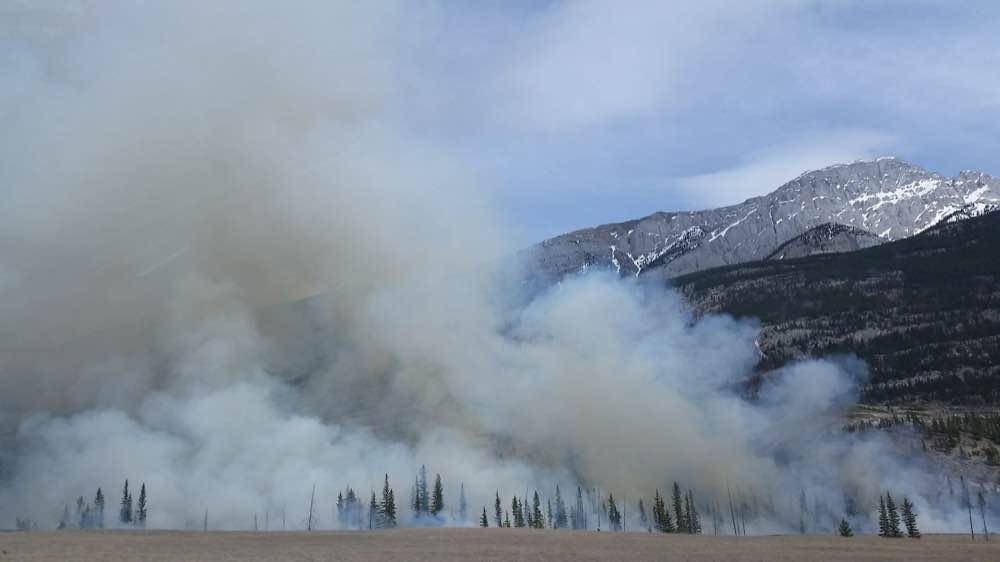
Wildfire is part of life here
The Colorado Springs area has seen major wildfires. The 2012 Waldo Canyon fire burned on the city's west side and destroyed 346 homes. A year later, the 2013 Black Forest fire northeast of the city destroyed roughly 500 homes. Both fires killed two people. Beyond the homes that burned, thousands more dealt with smoke and ash.
Smoke from fires much farther away, including fires in other states, also drifts over the Front Range some summers. You can check current smoke conditions on the AirNow Fire and Smoke Map.
How wildfire smoke gets inside
Fine smoke particles pass through gaps around windows and doors, attic vents, fireplace chimneys, and HVAC fresh-air intakes. Ash can blow in through any opening. Inside, the residue settles on surfaces and gets absorbed into fabric, carpet, and insulation. Homes close to a fire can also get heavier soot and ash deposits.
The EPA calls the fine particles in smoke the biggest health threat from smoke. If anyone in your home has asthma, heart, or lung conditions, talk to a doctor about precautions.
Signs of smoke damage after a wildfire
- Smoke odor that doesn't fade after the air outside clears.
- Fine gray or black dust on windowsills, floors, and furniture.
- Ash in the attic, on insulation, or in window tracks.
- Discolored HVAC filters or soot around vents.
- Odor in carpet, curtains, bedding, and clothing.
What to do during and after smoke events
During heavy smoke, the EPA suggests keeping windows and doors closed, setting the HVAC to recirculate, and using a portable air cleaner or a high-efficiency (MERV 13 or higher, if your system can handle it) furnace filter (EPA: wildfires and indoor air).
After the smoke clears:
- Replace HVAC filters, possibly more than once.
- Don't dry-sweep or use a regular vacuum on fine ash; it can put particles back in the air. A HEPA vacuum is better. Wear an N95 respirator if you're cleaning ash.
- Wash hard surfaces with damp cloths after vacuuming.
- Launder washable fabrics, or have them professionally cleaned if odor persists.
- Take photos of soot, ash, and any damage for insurance.
- Call (719) 722-2575 if odor or residue persists. Our guide on smoke odor after a wildfire covers what usually works.
How professional cleanup usually goes
- Assessment of residue and odor through the house, attic, and ductwork.
- HEPA vacuuming of surfaces, then cleaning with products suited to the residue.
- Attic and insulation checks; heavily affected insulation may be removed and replaced.
- HVAC cleaning so the system stops spreading residue.
- Contents cleaning for textiles and belongings.
- Odor treatment after cleaning, and sealing primers where needed.
- Exterior cleaning of siding, decks, and windows for homes near the fire.
After a fire: flooding risk
Burned slopes shed water much faster than healthy ground. After the Waldo Canyon fire, the burn scar increased flood danger for Colorado Springs, Manitou Springs, and Ute Pass. If you live below a recent burn area, read our page on flood damage restoration and talk to your agent about flood insurance.
What affects the price
Distance from the fire, how much residue got inside, square footage, attic and insulation work, HVAC cleaning, contents, and odor treatment.
Insurance notes
Coverage for smoke damage from a wildfire depends on your policy and the extent of damage. Document residue and odor with photos and keep cleaning receipts. Colorado has passed laws in recent years on homeowners claims after wildfires; check with the Colorado Division of Insurance or your insurer for what applies to you. This is general information, not advice.
Frequently asked questions
The fire was miles away. Can my house still have smoke damage?
Yes. Smoke and fine ash can travel long distances and get into homes far from the fire, though damage is usually heavier close to it.
Is it safe to clean ash myself?
For light ash, many people do, with an N95 respirator, gloves, and a HEPA vacuum. Heavy ash or soot, or anyone with health conditions, is a reason to call a pro.
Will an air purifier remove the smell?
A good air cleaner helps with particles in the air, but odor absorbed into surfaces and fabrics usually needs cleaning.
Should I get my ducts cleaned after a wildfire?
If you see soot on vents and filters, or odor comes out when the system runs, it's worth having them inspected.