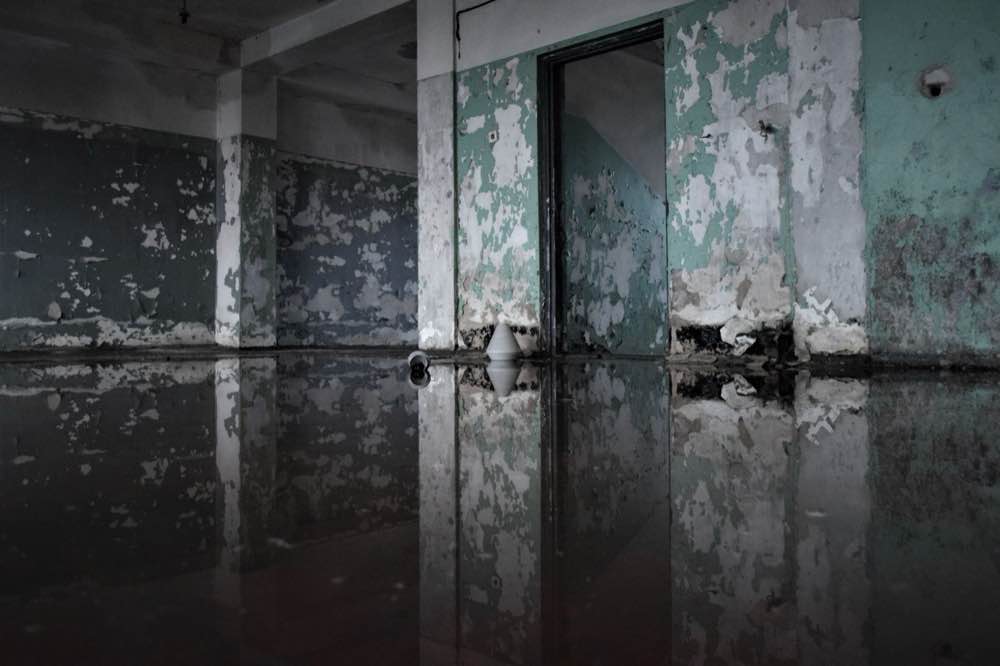
Why basements flood here
Basements are common in homes along the Front Range, from older neighborhoods to newer subdivisions. Because they're below ground, water from almost any source ends up there. The usual causes:
- Burst pipes. Supply lines in basement ceilings and exterior walls can freeze in a cold snap and split. See burst pipe water damage.
- Water heaters and washers. Most sit in the basement, and when a tank or hose fails, the water stays there.
- Sump pump failure. If your home has a sump pit, a stuck float, dead pump, or power outage during a heavy storm can let it overflow. Our sump pump guide covers this.
- Sewer backups. Water coming up through the floor drain is often a main sewer line problem. See sewage backup cleanup.
- Surface water. Heavy summer storms, poor grading, or blocked window wells can push water through foundation cracks or basement windows.
- Swelling soils. Parts of Colorado have expansive clay soils that can crack foundations and slabs over time; the Colorado Geological Survey has a homeowner guide.
Safety first
A flooded basement is one of the more dangerous water situations in a house:
- Electricity. Basements often hold the breaker panel, furnace, water heater, and washer. If water could be touching any of them or any outlet, don't go down the stairs. The CDC advises against wading through standing water to reach the main power switch.
- Gas appliances. If you smell gas, leave and call your gas utility from outside.
- Sewage. If the water came up through a floor drain, assume it's contaminated.
- Stairs. Wet basement stairs and floors are slick.
What to do right now
- Stop the water source if you can reach the shutoff safely.
- If the panel is dry and you can reach it without standing in water, turn off power to the basement.
- Take photos and video from the stairs before anything is moved.
- If it's clean water and it's safe, start removing water with a wet vac or pump.
- Move boxes and belongings up and out of the wet area.
- Call (719) 722-2575 to get connected with a restoration company.
How basement cleanup usually goes
- Assessment. The pro identifies the source and the type of water. Clean supply-line water, gray water from an appliance, and sewage are handled differently.
- Pump-out and extraction. Submersible pumps for deeper water, then extractors for carpet and the slab.
- Removal. Carpet pad, soaked drywall (often a flood cut a foot or two up the wall), insulation in finished walls, and damaged trim usually come out.
- Cleaning. Surfaces are cleaned, and disinfected after contaminated water.
- Drying. Air movers and dehumidifiers dry the slab, framing, and remaining drywall. Concrete holds a lot of moisture and can take a while. See water extraction and drying.
- Rebuild. Drywall, insulation, flooring, and paint once readings say it's dry.
Finished vs. unfinished basements
An unfinished basement with a concrete floor and open framing is much easier to dry: pump out the water, clean, and run equipment. A finished basement adds carpet, pad, drywall, insulation, built-ins, and sometimes a bathroom or bedroom, and each layer holds water. Finished basements cost more to dry and rebuild, and they're where hidden mold tends to start. See basement mold removal.
What affects the price
Depth and area of the water, whether it's clean water or sewage, how long it sat, whether the basement is finished, and how much has to be removed and rebuilt. Pumping out deep water and running equipment for longer also adds cost. Our water damage cost guide has more.
Insurance notes
Coverage depends on the cause. A burst pipe or failed water heater is often handled differently from a sump pump overflow, a sewer backup (often needs an endorsement), or groundwater and surface flooding (often needs separate flood insurance; see FloodSmart). This is general information, not advice. Check your policy or ask your agent. Our insurance guide explains the usual categories.
Frequently asked questions
How long does a basement take to dry?
Often several days of drying after extraction, longer for a finished basement or a thick slab. Moisture readings decide when it's done.
Can I just pump it out and open the windows?
For an inch of clean water in an unfinished basement, that can be a start. For carpet, drywall, or anything that sat more than a day, you'll likely need dehumidifiers and air movers to dry the materials, not just the room.
Should I replace the drywall right away?
No. Rebuilding before the framing and slab are dry can trap moisture and lead to mold.
Is it safe to stay in the house?
Often yes, if the water was clean, the electrical system is safe, and the upstairs is unaffected. With sewage in the basement, keep people and pets out of that area until it's cleaned.