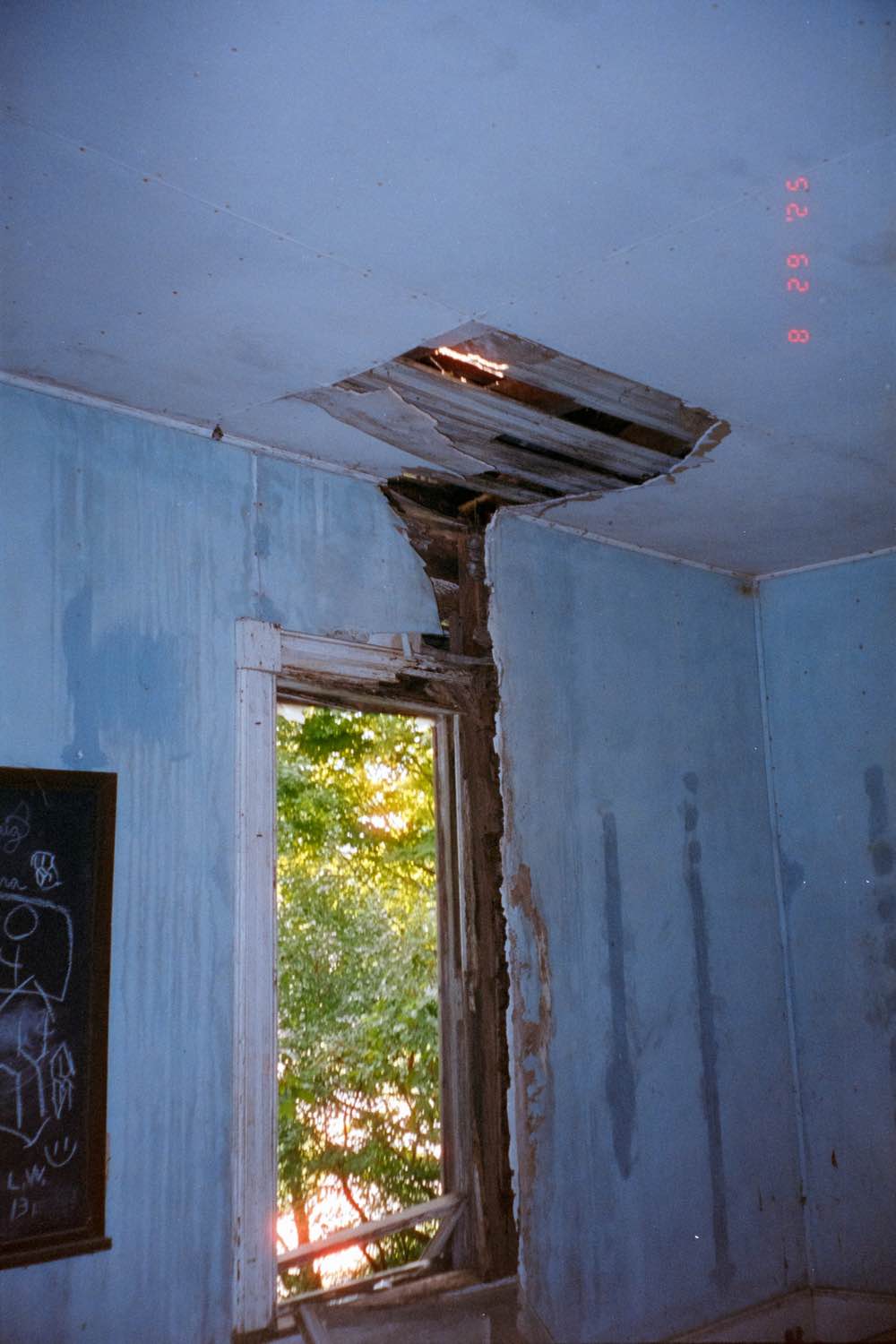
Where ceiling leaks come from
A ceiling stain is a symptom. The water could be coming from:
- A bathroom above. Leaking toilet wax rings, failed tub or shower seals, cracked grout, and supply line leaks.
- A burst or leaking pipe in the ceiling space, often after a freeze. See burst pipe water damage.
- The roof. Hail damage, missing shingles, worn flashing around chimneys and vents, and ice dams after heavy snow.
- HVAC condensation. A clogged condensate line or pan on an attic furnace or air conditioner.
- A water heater or washer on an upper floor.
Where the stain shows up isn't always right under the leak. Water can run along joists and pipes before it drips through, so finding the source can take some detective work.
Warning signs
- Yellow or brown rings on the ceiling, especially ones that grow.
- Paint bubbling or peeling.
- Drywall that sags, feels soft, or has a "belly."
- Water dripping from a light fixture, vent, or smoke detector.
- A musty smell in an upstairs bathroom or the room below it.
- Dark spots or speckles that could be mold. See mold inspection and testing.
What to do right now
- Stop the source if it's plumbing: shut off the fixture valve or the main water.
- Stay out from under a sagging ceiling. Wet drywall is heavy and can fall without warning.
- Kill power to a light fixture that's dripping, at the breaker, if the panel is dry and safe to reach.
- Catch the water. Put a bucket and towels under the drip. If a bulge is forming and it's safe, some people poke a small hole at the lowest point to let water drain into a bucket in a controlled way; only do this standing to the side, never directly underneath.
- Move furniture and electronics out of the way.
- Take photos of the stain, the source if you can see it, and any damage.
- Call (719) 722-2575 to get connected with a restoration company.
For a roof leak during a storm, a roofer may need to tarp the roof before inside drying can finish.
How the job usually goes
- Find the source. Moisture meters and thermal cameras help trace water above the drywall.
- Stop the source. Plumbing repairs or roof tarping, often by a plumber or roofer.
- Open the ceiling. Wet ceiling drywall and insulation usually have to come down so the cavity can dry. Wet insulation stays wet for a long time.
- Dry. Air movers and dehumidifiers, sometimes with air directed into the cavity. See water extraction and drying.
- Check for mold on framing and the back of the drywall.
- Repair. New drywall, texture matching (popcorn or knockdown can be tricky), primer, and paint.
Can I just paint over the stain?
Only after the leak is fixed and the ceiling is confirmed dry. Painting over a wet ceiling traps moisture and the stain usually bleeds back through. A stain-blocking primer is needed even when it's dry.
What affects the price
The size of the wet area, whether insulation has to come out, how many floors are involved, ceiling height, and how hard the texture is to match. Fixing the source (plumbing or roof) is usually a separate cost. See the cost guide.
Insurance notes
A sudden pipe or appliance leak is often treated differently from a slow leak that's been going on for months, which many policies exclude. Roof leaks depend on whether there was storm damage, like hail, or wear and tear. This is general information; check your policy. See our insurance guide and our guide on how to tell if water damage is old or new.
Frequently asked questions
Is a small stain an emergency?
Not always, but don't ignore it. A small stain can mean a slow leak that's been soaking insulation and framing for a while. Get it checked before it grows.
Who do I call first, a plumber or a restoration company?
Stop the water first. If it's a plumbing leak, a plumber fixes the pipe and a restoration company dries and repairs the ceiling. Call (719) 722-2575 and we'll connect you with a restoration pro; many work with plumbers regularly.
Does the ceiling have to be torn out?
Not always. Small areas that dry quickly can sometimes stay. Drywall that sagged, crumbled, or got wet from dirty water usually comes out.
Could there be mold above the ceiling?
Yes, if the leak has been going a while. A pro can check the cavity when it's opened.