The usual suspects
Appliance leaks are among the most common water damage claims, and they often happen out of sight:
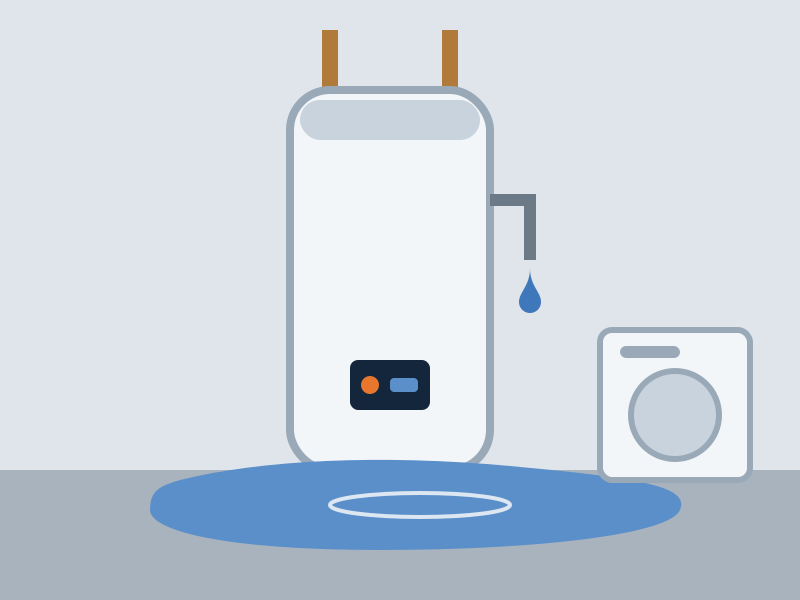
- Water heaters. Tanks corrode from the inside over time. When the tank fails it can leak slowly for weeks or dump a large amount of water at once. The relief valve and the supply connections can leak too.
- Washing machine hoses. Rubber supply hoses crack and burst, and when they do, water runs at full pressure until someone shuts it off.
- Dishwashers. Supply line, drain hose, and door seal leaks, often hidden under the cabinet until the floor buckles.
- Refrigerator ice makers. Thin plastic supply lines behind the fridge can split or get pinched.
- Toilets. Supply lines and fill valves under the tank.
- Furnaces and AC units. Condensate lines and humidifiers on the furnace can drip for a long time unnoticed.
Warning signs
- Water or rust around the base of the water heater.
- Rumbling or popping from the tank, or rusty hot water.
- Bulging or rust-stained washer hoses.
- Warped laminate or cupped wood near the dishwasher or fridge.
- Soft spots in the floor, or a musty cabinet under the sink.
- A water bill that jumps without explanation.
What to do right now
- Shut off the water. Most appliances have their own valve. For a water heater, close the cold water supply valve on top. If you can't, use the main shutoff.
- Shut off the energy to a water heater. For gas, turn the control to "off" or "pilot." For electric, turn off its breaker. Don't drain it yourself if the water is hot.
- Watch for electricity. Don't stand in water near outlets or the panel.
- Remove what you can. Wet vac clean water off hard floors and carpet; pull rugs and boxes out of the way.
- Take photos of the appliance, the failed part, and the damage. Keep the failed part if you can; insurers sometimes want to see it.
- Call (719) 722-2575 to get connected with a restoration company, and call a plumber to replace the appliance or connection.
How the job usually goes
- Inspection. The pro checks how far water traveled: under cabinets, beneath flooring, into the wall behind the appliance, and through the floor to a ceiling below.
- Extraction of standing water.
- Removal. Toe-kicks under cabinets, baseboards, wet carpet pad, and sometimes floating floors come out so the subfloor can dry.
- Drying. Air movers and dehumidifiers, sometimes with special setups to dry under cabinets and inside walls. See water extraction and drying.
- Repairs to flooring, cabinets, drywall, and any ceiling below.
Water heaters and washers often sit in basements and utility rooms, so these jobs overlap with flooded basement cleanup.
Slow leaks vs. sudden failures
A hose that bursts and floods the laundry room in an hour is a sudden event. A dishwasher that drips a little every time it runs for six months is a slow leak. The cleanup is different (slow leaks often come with rot and mold), and insurance treats them very differently. Our guide on telling old water damage from new explains the signs.
What affects the price
How long water ran, whether it reached other rooms or the floor below, whether cabinets and hardwood or laminate floors are involved, and how much has to be removed to dry. Replacing the appliance is a separate cost. See the cost guide.
Insurance notes
Many homeowners policies cover sudden water damage from an appliance failure, but usually not the appliance itself, and usually not damage from a long-term leak. This is general information; your policy wording decides. See our insurance guide.
Frequently asked questions
How do I prevent washer hose bursts?
Check the hoses for bulges and cracks, replace old rubber hoses with braided ones, and turn the valves off when you're away for a while.
Should I put a pan under my water heater?
A drain pan piped to a drain, plus an inexpensive water leak alarm, can catch problems early. Ask a plumber what fits your setup.
Can kitchen cabinets be saved?
Sometimes. Particleboard that swelled usually can't. Solid wood cabinets often dry well if the space underneath is opened and dried quickly.
My dishwasher leaked under laminate. Does it all come up?
Floating floors trap water underneath, so the wet section often has to come up to dry the subfloor. Whether it can be reinstalled depends on the material.