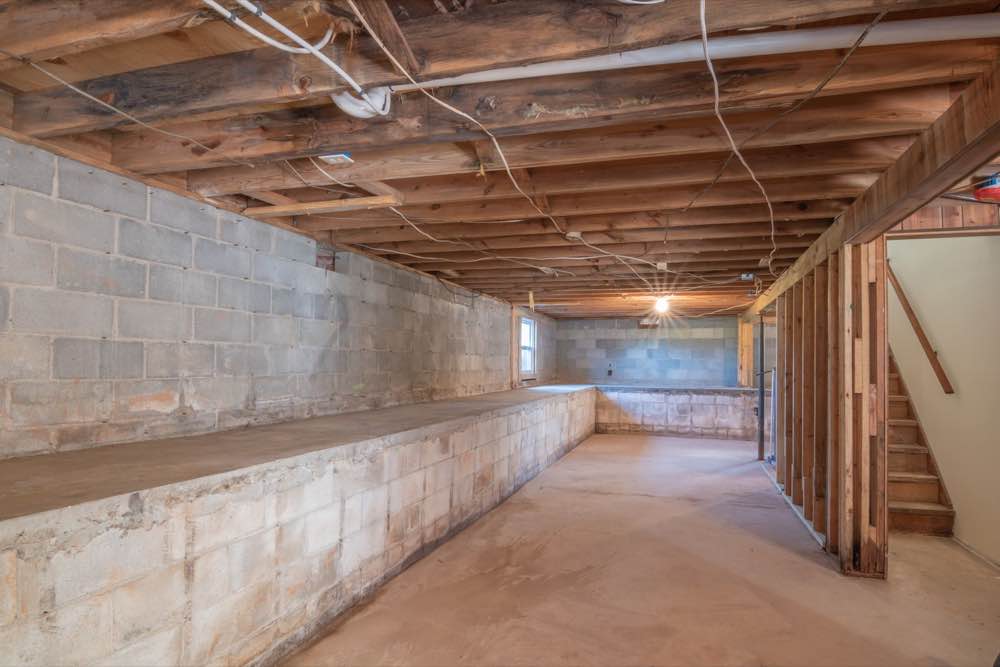
Why basements grow mold
A basement is the coolest, lowest part of the house. Every leak ends up there eventually, and cool surfaces collect condensation. Concrete walls and floors can also wick moisture from the soil. Add carpet, drywall, and insulation in a finished basement, and you have plenty of material for mold to grow on, hidden behind walls where nobody looks.
Common triggers in Colorado Springs basements:
- A flooded basement from a burst pipe, water heater, or washer that was cleaned up but not dried inside the walls.
- Sewage backups through the floor drain.
- A failing sump pump in homes that have one. See our sump pump guide.
- Foundation cracks that let water in during storms or snowmelt. Some areas along the Front Range have expansive soils that move with moisture; the Colorado Geological Survey explains how they can damage foundations.
- Window wells that fill with water or snow.
- Humid air in summer meeting cool basement walls.
Signs of basement mold
- A musty smell when you open the basement door.
- Stains or dark spots near the bottom of drywall or on baseboards.
- White, powdery deposits on concrete. That's often efflorescence (mineral salts from moisture moving through concrete), not mold, but it does mean water is getting in.
- Carpet that smells damp or has stains around the edges.
- Mold on stored boxes, furniture, or the underside of stairs.
- Mold on floor joists and subfloor in an unfinished ceiling.
What to do right now
- Find the moisture. Check around the water heater, floor drain, sump pit, window wells, and exterior walls.
- Run a dehumidifier if the basement feels damp, and empty it often.
- Get boxes off the floor and away from outside walls.
- Don't rip out moldy drywall yourself if it's more than a small patch. The EPA uses about 10 square feet as the rough limit for do-it-yourself cleanup.
- Call (719) 722-2575 to get connected with a restoration company that handles mold.
How basement mold removal usually goes
- Inspection and moisture mapping. Finding how far the mold and moisture extend, often by checking behind baseboards and using moisture meters. See mold inspection and testing.
- Fix the source. Plumbing, drainage, grading, sump pump, or foundation work, depending on the cause. This may involve a plumber or foundation contractor.
- Containment. The work area is sealed off so spores don't travel upstairs through the stairwell or HVAC returns.
- Removal. Moldy drywall, insulation, carpet, and pad come out. Framing and the concrete are cleaned.
- HEPA cleanup and air filtering.
- Drying with dehumidifiers until moisture readings are normal.
- Rebuild, ideally with materials and details that handle future moisture better.
Rebuilding a finished basement after mold
When the walls are open, it's a good time to ask about:
- Keeping drywall slightly off the concrete floor.
- Moisture-tolerant materials near the floor.
- Running a dehumidifier full time in damp seasons.
- Fixing exterior drainage: gutters, downspout extensions, grading away from the house.
A restoration company or contractor can tell you what makes sense for your home.
What affects the price
How much of the basement is affected, finished vs. unfinished, how much drywall, insulation, and flooring come out, containment, and rebuilding. Fixing the source (drainage or foundation) is separate. See the mold removal cost guide.
Insurance notes
Mold that follows a covered sudden water event may be covered, often with limits. Mold from ongoing seepage, humidity, or groundwater usually isn't. This is general information; check your policy.
Frequently asked questions
Is efflorescence the same as mold?
No. Efflorescence is a white mineral deposit on concrete or brick. It isn't mold, but it shows water is moving through the wall.
Can I paint the basement walls with mold-resistant paint?
Not over existing mold. After proper removal and with the moisture fixed, some people use moisture-resistant coatings on concrete. Ask a pro.
Will a dehumidifier stop basement mold?
It helps prevent it by keeping humidity down, but it won't remove mold that's already growing or fix a leak.
Does basement mold affect the rest of the house?
It can. Air moves up through stairwells and HVAC systems. That's why containment matters during removal.