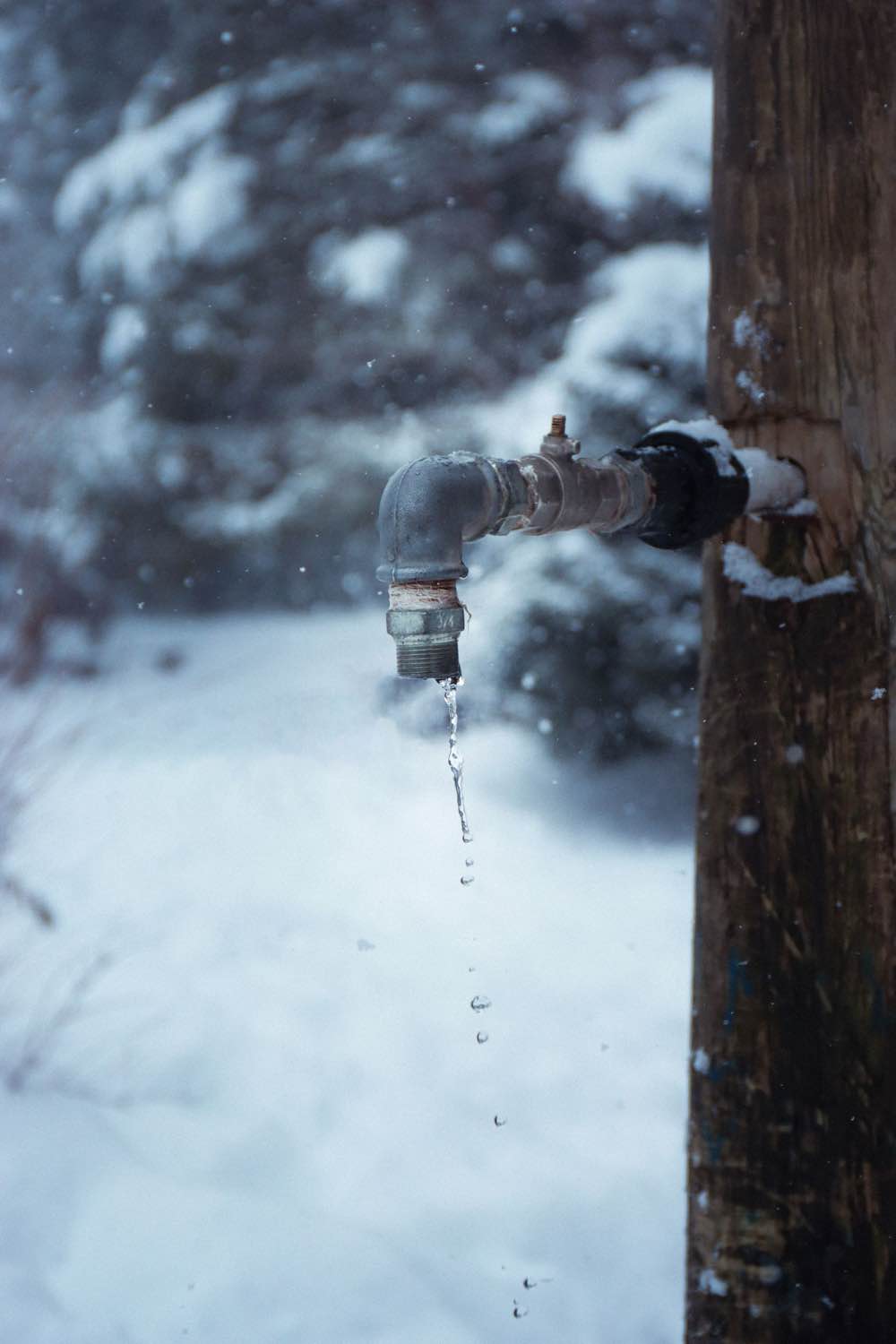
Why pipes freeze here
Colorado Springs winters are often mild and sunny, with sharp cold snaps in between. Those swings catch people off guard. A pipe that was fine all December can freeze on one bitter night in January, especially if it's in an exterior wall, a crawl space, an attic, a garage, or a cabinet on an outside wall. Wind makes it worse by pulling heat out of walls on the exposed side of the house.
When water freezes it expands. The pipe usually splits between the ice and a closed faucet, where pressure builds up. The leak often doesn't show until the pipe thaws, which is why burst pipes are often found the day after a cold night, or when someone gets home from a trip.
Colorado Springs Utilities has its own frozen water line tips, and this guide follows the same basic advice.
In the fall
- Outdoor faucets. Disconnect hoses. If you have a separate shutoff inside for the outdoor spigot, close it and open the outdoor faucet to drain it. Many newer homes have frost-free sillcocks, but they only work if the hose is disconnected.
- Sprinkler systems. Have the lines blown out before the first hard freeze. Close the inside shutoff and protect the backflow preventer.
- Insulate exposed pipes in crawl spaces, garages, attics, and unfinished basements with foam pipe sleeves. Pay attention to pipes along exterior walls.
- Seal drafts near pipes: gaps where pipes enter the house, crawl space vents, dryer vents, and rim joists.
- Find your main shutoff and make sure it turns. Tag it so everyone in the house knows where it is.
- Check the garage. If the water heater, a laundry sink, or pipes are in the garage, keep the garage door closed in cold weather.
During a cold snap
Colorado Springs Utilities recommends steps like these during extreme cold (CSU frozen water lines):
- Open cabinet doors under sinks on exterior walls so warm air reaches the pipes.
- Let a thin stream of cold water run (about the width of a pencil) from faucets on exterior walls. Moving water is harder to freeze.
- Keep the thermostat steady, day and night. Skip the deep nighttime setback during the coldest nights.
- Keep interior doors open so heat reaches back rooms.
- Check vulnerable spots in the morning: low water pressure at a faucet can be the first sign of freezing.
When you travel
- Keep the heat at 55 or above, as CSU suggests for when you're away. Don't turn it off.
- For long trips, shut off the main water and open faucets to drain the lines. If you have a boiler or fire sprinklers, ask a plumber first.
- Ask someone to check the house after any cold snap.
- Consider a smart thermostat or temperature alarm that alerts your phone if the house gets cold or a leak sensor gets wet.
- Read your policy. Many insurance policies limit freeze coverage if a home was left without heat. See our insurance guide.
If a pipe is frozen
- Keep the faucet open. As the ice melts, running water helps thaw it and relieves pressure.
- Find the frozen section. It's usually on an exterior wall or in an unheated space.
- Apply gentle heat: a hair dryer, a space heater kept a safe distance away, or warm towels. CSU suggests starting near the faucet and working back.
- Never use an open flame like a torch. It's a fire hazard and can damage the pipe.
- If you can't find it or can't reach it, call a plumber.
- Watch closely as it thaws. If water starts leaking, shut off the main.
If a pipe bursts
Shut off the main water, stay away from water near electrical outlets and fixtures, take photos, and call your insurer. Then call (719) 722-2575 to get connected with a restoration pro for extraction and drying. See burst pipe water damage and our first 24 hours checklist.
Long-term fixes
If the same pipe freezes every winter, the real fix is moving it to an interior wall, adding insulation to the wall cavity, sealing air leaks, or adding heat to the space. A plumber or insulation contractor can tell you which makes sense. Heat tape is an option for some pipes; follow the manufacturer's directions closely and use only products rated for the use.
Frequently asked questions
What temperature freezes pipes?
There isn't one number. It depends on how exposed the pipe is, wind, and how long the cold lasts. Pipes in exterior walls and unheated spaces are at risk in any hard freeze.
Are PEX pipes freeze-proof?
No. PEX is more flexible than copper and may tolerate some freezing, but fittings and the pipe can still fail.
Does my side or the utility's side freeze?
Either can, but the pipes inside your house and your private service line are your responsibility. CSU explains that the curb stop marks the dividing line. See our guide on water main breaks vs. your own pipes.